
Flagpole Installation and Repair Services in Jupiter, FL
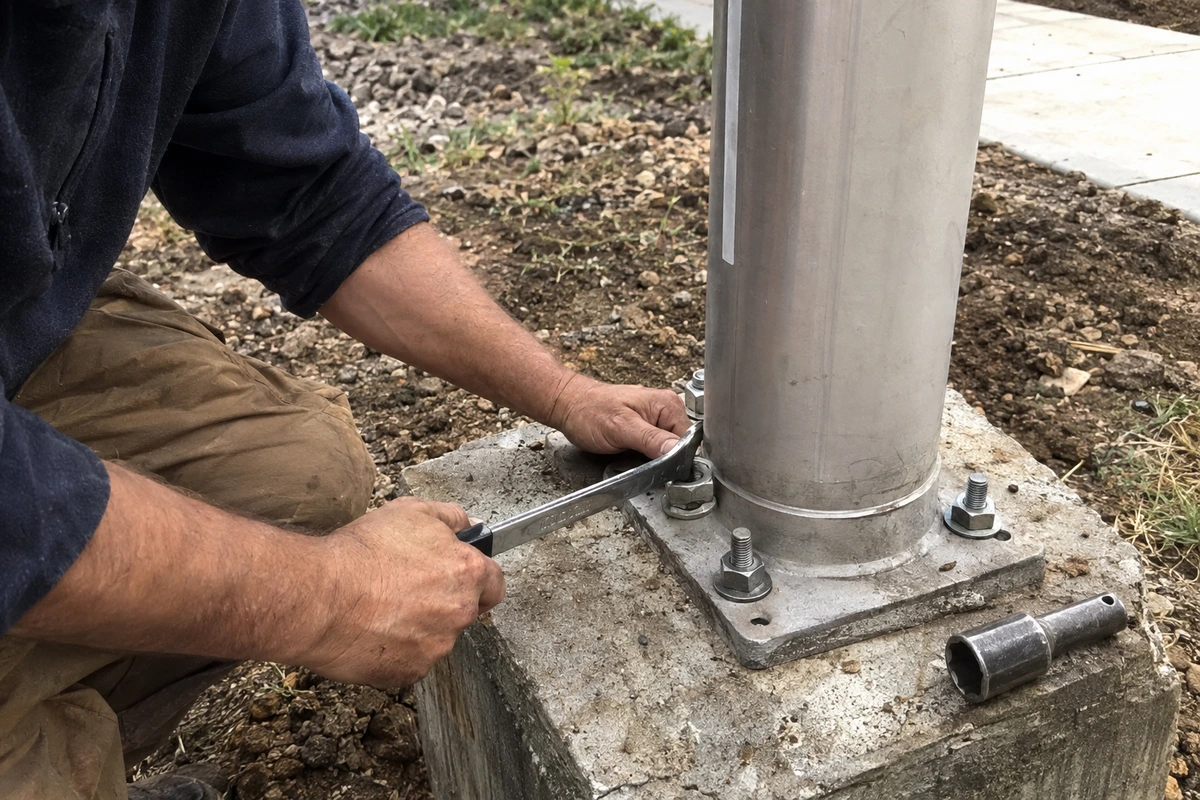
Miami Flagpole Experts provides flagpole installation and repair services across South Florida for homes, businesses, schools and churches. We put in aluminum and fiberglass poles for yards and storefronts, nautical yardarm poles for waterfront homes and clubs, and rooftop poles for commercial buildings. Frayed halyards, jammed internal winches, pitted finishes and missing finials are the repairs we handle most, from restringing lines to refinishing weathered poles. Contact us for a free quote today.
How Do You Know a Flagpole Needs Repair or Reinstallation?
The clearest sign is a pole that's no longer plumb. A lean almost always means something has shifted at the base, not just at the top. Once you know where to look, a few other problems turn up on many residential poles, and each one points to a different part of the system.
- Pole leaning or out of plumb at the base
- Halyard rope frayed, stiff, or slipping in the pulley
- Truck (top cap) pulley squealing or not spinning
- Cracked or crumbling concrete around the ground sleeve
- Rust bloom or pitting near the bottom of the pole
Why Does a Flagpole Start Leaning at the Base?
A lean that starts at the base almost always means the footing has moved. Either the concrete was set too shallow, or the surrounding soil has washed out or heaved through freeze-thaw cycles. A 20-foot residential pole catches a lot of wind through its flag, and every gusty afternoon that load levers straight down into the footing. If the pole sits in a ground sleeve, it can sometimes be re-shimmed and wedged back to plumb without breaking out the concrete. If it was direct-buried with no sleeve, straightening it usually means digging out the footing and re-pouring it below the local frost line. Bracing it from above only holds until the next hard freeze.
Can You Just Swap the Halyard Rope When It Frays or Slips?
Usually, yes. It's one of the simpler jobs on a pole. Braided polyester halyard breaks down under UV and constant flapping, and once it stiffens or frays, it starts slipping in the pulley groove or wearing through at the cleat. The trick is to pull the new line through using the old one while it's still in place, so you don't have to lower the pole or bring in a lift to rethread the truck. Check the snaps and cleat while you're at it, because a sharp burr on a cheap cleat will chew through a fresh rope within a season.
Does a Squealing Truck Pulley Mean the Whole Top Assembly Is Shot?
Not necessarily. Most squeals come from a dry or corroded pulley axle, or from a sheave that's picked up grit and stopped turning freely, while the housing itself is often still sound. A seized pulley grinds the halyard instead of rolling it, so the noise is worth tracking down before it eats your new rope. Revolving trucks that turn with the wind develop the same problem at their bearing, and on many designs that bearing can be replaced without swapping the whole cap. The full truck only needs replacing if the casting is cracked or the threads that mount it to the pole top are stripped.
Is Cracked Concrete Around the Ground Sleeve Just a Cosmetic Problem?
No. It's structural, even when the pole still looks straight. Hairline cracks radiating from the sleeve tell you the footing is flexing under wind load, and once water gets into them, freeze-thaw widens them every winter. Over time that flexing loosens the sleeve's grip and lets the pole start to rock, which is how most base leans begin. Small surface cracks can be sealed. But if you can wiggle the pole by hand or the collar is breaking away in chunks, the footing needs to be cut out and repoured in a properly sized hole, usually several times the pole's diameter.
Why Does Rust Show Up Near the Bottom of the Pole First?
The bottom few inches are where moisture lingers longest, especially where the pole meets the concrete or a flash collar that traps rainwater against the metal. Steel poles, and galvanized poles with scratched coatings, rust there first. Even aluminum poles can pit if they sit in damp soil or touch a dissimilar metal. Surface bloom can be wire-brushed, primed, and painted, but deep pitting thins the wall right where bending stress is highest. If a screwdriver tip sinks into a soft spot near the base, replace the pole. That's exactly where a corroded flagpole snaps in a storm.
How Much Does Flagpole Installation and Repair Cost in Jupiter, FL?
Flagpole installation and repair in Jupiter, FL typically runs $279 to $3,087. The low end covers quick fixes like rethreading a halyard or replacing a seized truck pulley. Full installs cost more because height, wall thickness, and material all drive the price, so a 25-foot aluminum pole runs well above a 15-foot one. The biggest swing is the footing. Breaking out a cracked collar and repouring below the frost line means excavation, fresh concrete, and a return trip once it cures.